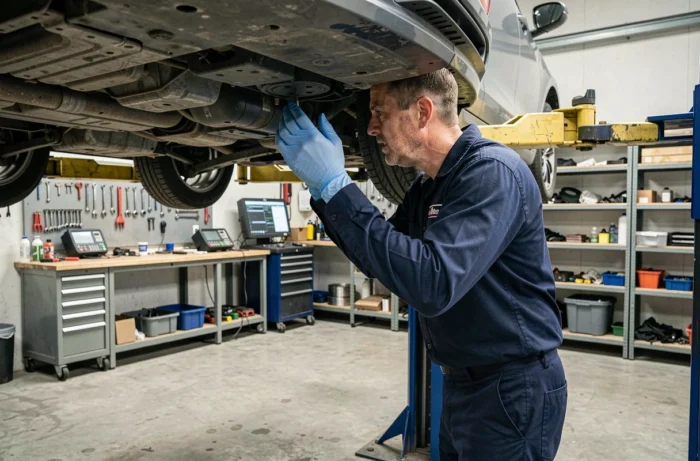
The EAT8 (Efficient Automatic Transmission 8-speed) is an eight-speed automatic transmission developed by Aisin in partnership with the PSA Group. It equips a large portion of recent Peugeot, Citroën, DS, and Opel vehicles. Despite manufacturer recommendations that sometimes present it as a “maintenance-free” transmission, Aisin advises regular fluid changes to maintain its performance.
Diagnosis Before Fluid Change: The Reflex That Avoids Unnecessary Expense
A jolt during gear shifting or hesitation when starting cold does not necessarily mean that the fluid in the EAT8 transmission is at fault. A software update of the transmission control unit can produce symptoms similar to those of degraded lubricant.
Before scheduling a fluid change, the first step is to check the software version of the control unit (TCU) and to look for any applicable technical campaigns for the vehicle. These campaigns, distinct from safety recalls, concern operational defects and may not always be listed in the same public databases.
The individualized check is done through the VIN number (Vehicle Identification Number), which can be consulted on the manufacturer’s website or with an authorized repairer. This check allows you to determine if a free software correction resolves the issue, thus avoiding paying for a mechanical intervention costing several hundred euros for a purely electronic fault.
The information regarding the price and maintenance of the EAT8 transmission varies depending on the type of intervention actually needed, which reinforces the usefulness of a precise diagnosis beforehand.
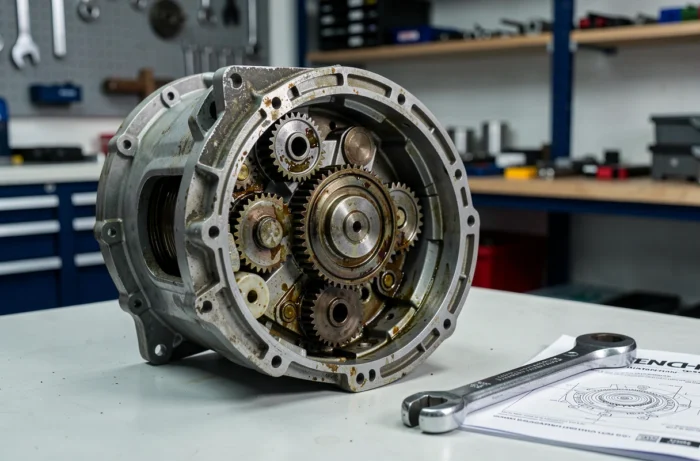
EAT8 Transmission Fluid: Role of the Fluid and Replacement Frequency
The ATF (Automatic Transmission Fluid) serves three functions in the EAT8 transmission: lubricating mechanical components, cooling the system, and ensuring the proper functioning of the solenoids that control gear shifts.
As mileage increases, this fluid becomes contaminated with microscopic metal particles and gradually loses its viscosity and thermal protection properties. Degraded fluid causes jolts and accelerates internal wear of the transmission.
Recommended Fluid Change Interval by Aisin
Aisin recommends a fluid change every 60,000 to 80,000 kilometers. This threshold should be shortened in the following situations:
- Predominantly urban use with short trips and frequent stops, which keep the fluid at unfavorable operating temperatures
- Regular towing or driving under high load, which puts more strain on the torque converter and raises fluid temperature
- Sporty driving with repeated high gear shifts and frequent downshifts
Under these conditions, some professionals advise reducing the interval to below 60,000 kilometers.
Static or Dynamic Fluid Change: Two Methods, Two Results
The fluid change for the EAT8 transmission can be performed in two ways, and the choice of method directly influences the cost and effectiveness of the operation.
Static Gravity Drain
The static method involves opening the drain plug and allowing the fluid to flow out by gravity. This technique only replaces part of the total fluid, as a significant amount remains trapped in the torque converter and internal circuits. The static drain is less expensive but incomplete.
Dynamic Drain with Specialized Machine
The dynamic drain uses a machine connected to the transmission cooling circuit. It circulates new fluid while the engine is running, allowing for the replacement of almost all the oil. The result is significantly better, but the operation takes more time and requires specific equipment.
The prices observed on specialized platforms range from a few hundred euros for a simple static drain to a significantly higher amount for a dynamic drain that includes replacing the filter and pan.
Electronic Reset After Fluid Change
After replacing the fluid, a reset of the transmission control unit is necessary. Without this step, the transmission continues to operate with parameters calibrated for the old fluid, which can lead to inappropriate gear shifts. This procedure is done via a diagnostic tool connected to the vehicle’s OBD port.

Reliability of the EAT8 Transmission in the Used Car Market
For buyers of used vehicles equipped with an EAT8, the maintenance history of the transmission is a selection criterion that should not be overlooked. The absence of a fluid change invoice on a vehicle exceeding 80,000 kilometers is a warning sign.
Several points deserve special attention when examining a used vehicle:
- Check the color and smell of the ATF fluid via the dipstick or inspection plug: dark oil or burnt smell indicates advanced degradation
- Check the VIN number to identify any unaddressed technical campaigns, which may involve updates to the control unit or internal parts
- Test the transmission cold and hot to detect hesitations or jolts that are absent during normal operation
A documented fluid change history protects against unpleasant surprises and can serve as a negotiation point for the purchase price.
Distinguishing a Transmission Problem from an Engine or Electronic Fault
Symptoms attributed to the EAT8 transmission sometimes stem from another component. A fault in the engine cooling circuit can raise the transmission fluid temperature without the transmission itself being at fault. Similarly, a faulty position sensor or corroded wiring can disrupt communication between the engine control unit and the TCU.
Having a complete readout of fault codes on both control units (engine and transmission) before any mechanical intervention allows for directing the diagnosis to the correct component. This readout generally costs much less than a complete fluid change and avoids addressing a symptom without resolving the actual cause.
The EAT8 transmission remains reliable when properly maintained with the appropriate fluid and at the intervals recommended by Aisin. The cost of regular fluid changes represents a fraction of the price of a heavy repair on the torque converter or solenoids, making it a maintenance investment that is hard to contest.