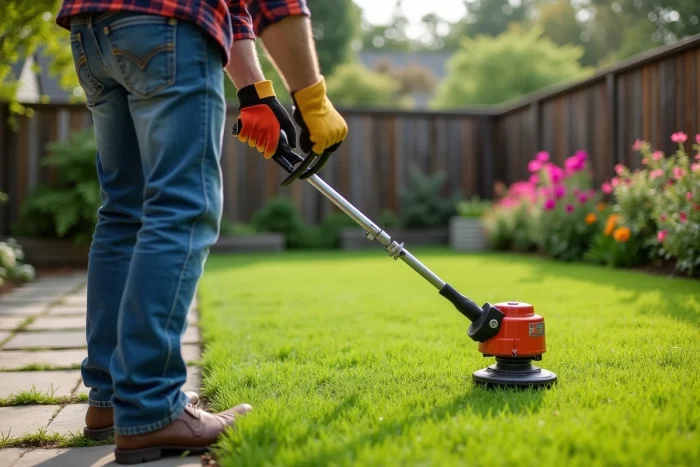
A battery-powered trimmer does not always guarantee sufficient autonomy for large spaces, despite manufacturers’ promises. Some corded models still outperform their cordless counterparts in terms of power and consistency, contrary to market trends. Local legislation sometimes imposes strict noise limits, questioning the choice of thermal engines, known for their efficiency but often noisy.
Between the weight of the device, the ease of replacing the line, and compatibility with dense vegetation, selection criteria vary greatly depending on actual usage. Durability remains a determining factor, often overlooked in favor of design or connected features.
What are the different types of trimmers and how do they differ?
The market has seen the emergence of multiple families of trimmers, each specializing more finely over time. The universal tool is being overshadowed by models tailored to every gardening requirement.
To better understand their differences, here is an overview of the main categories of trimmers and their utility:
- Corded electric trimmer: plugs into the mains for consistent cutting. A good compromise for medium-sized gardens, as long as dragging a cable doesn’t deter you.
- Battery-powered trimmer: freedom of movement is paramount. It requires little maintenance and follows you everywhere, well-suited for finishing touches or moderately sized gardens. However, battery life varies greatly from one model to another.
- Thermal brush cutter: a choice weapon for large areas or tough vegetation. It requires more maintenance and is noisy, which some municipalities do not tolerate well.
The choice of nylon line or blade directly affects the cut. For gentle finishes on delicate borders, the line is perfect. When facing thick grass, opt for a metal blade, which is more durable and resilient.
Before selecting a model, it’s best to analyze the garden’s layout, frequency of use, and the type of vegetation to manage. If you want to cross-reference different experiences and compare models for various profiles (from basic edge trimmers to tools designed for wildflower beds), the site https://www.coupe-bordure.com/ gathers a wealth of accessible information.
Choosing the right trimmer: essential criteria and model comparison
The options are plentiful, but the ideal tool varies according to the reality of your terrain. The first consideration: the cutting width. More than 30 cm? Wide paths and meadows can be tamed effortlessly. Less than 30 cm? The work is precise around borders, without unnecessary fatigue.
Longevity is not improvised: it’s better to invest in a reliable motor, a high-performance lithium-ion battery if you choose cordless, and a simple-to-maintain mechanism. Corded cuts provide unlimited autonomy as long as the cable doesn’t disrupt your movements. However, in medium-sized gardens, the battery really simplifies things.
To help you position yourself, here are the most sensible choices according to the situation:
- For meticulous finishes, a lightweight trimmer with sturdy nylon line checks all the boxes.
- For thick grass or uneven spaces, nothing beats a thermal brush cutter or a battery model with high autonomy.
Take the time to consult feedback on ease of maintenance, durability, and handle ergonomics. Weight, line winding, and ease of use quickly become important in your routine. Choosing wisely at purchase also means considering the consumables and small accessories that will be needed throughout the seasons.

Practical tips for effective use and easy daily maintenance
To get the most out of your trimmer, it often just takes a few simple habits. Before starting, clear the area: remove stones, branches, and anything that could obstruct the machine’s path or be projected. Glasses and gloves are never superfluous against the slightest twig launched by the motor’s reflex.
Adjust the cutting height to the area, especially near flower beds and sensitive borders. When the task becomes challenging in corners, reduce the speed to spare the line and gain precision. Conversely, dense grass requires increasing power, without ever losing your stability.
To extend the life of your equipment and prevent any unpleasant surprises, incorporate these good practices into your routine:
- Regularly inspect the line or blade, replacing them as soon as the sharpness weakens; a worn tool struggles to cut and can strain the motor.
- After each use, thoroughly clean the cutting head, removing grass residues and ensuring the line remains properly wound.
- Anticipate interruptions: keep spools, blades, or replacement caps handy so you are never caught unprepared during maintenance sessions.
Some electric models offer sufficient discretion not to disturb the neighbors, an asset on shared plots. Store your equipment away from moisture, recharge the battery at the end of each use, and enjoy a tidy garden all year round. Regular maintenance does not add a chore: it prolongs the life of your equipment and the satisfaction of a job well done.