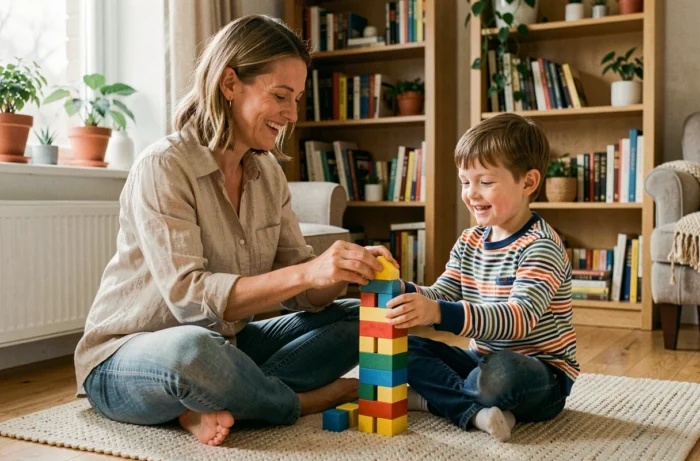
When a child goes through a period of withdrawal, repeated outbursts of anger or ongoing difficulties at school, the question of how best to support them quickly arises. Advice on positive communication and self-confidence covers some of the ground, but certain family, psychological or school-related situations call for more specific guidance. Distinguishing everyday challenges from those that require outside help can change how you support children day to day.
Children’s mental health: recognising when a passing difficulty is something more
Behaviours that worry parents (defiance, anxiety, isolation) are often part of normal development. The line between these and more persistent distress is less clear-cut than many people think.
Duration and intensity are useful indicators. A child who refuses to go to school for two days after a conflict with a classmate is going through a temporary episode. The same refusal lasting several weeks, accompanied by sleep problems or physical complaints, may point to something else.
An article by Vidal reports that some emergency visits for self-inflicted injuries among teenagers have remained high since 2021. This finding is not limited to extreme cases: it points to a broader decline that also affects families with no apparent risk factors. Recognising ongoing distress and seeking help is better than dismissing it as a behavioural problem.
Several resources bring together reliable information about children on Petits Bambins, helping parents compare developmental guidance with their own observations before seeking professional advice.
Screens and digital boundaries: guidance from the report submitted in April 2024

Screens are a major source of parental concern, often approached as a matter of discipline. The report by the expert committee, “Children and Screens: In Search of Lost Time”, submitted in April 2024, shifts the focus towards prevention and development.
| Common approach | Approach in the report (April 2024) |
|---|---|
| Set a daily screen-time limit | Adapt boundaries to the child’s age and the type of content |
| Ban certain social networks | Introduce structural prevention measures |
| Monitor browsing history | Support children’s use of technology while developing critical thinking |
| Punish children for exceeding the limit | Establish a negotiated, flexible family framework |
The difference lies in the approach. Effective digital boundaries evolve as a child grows, rather than relying on a single rule from nursery school through to secondary school. Parents who negotiate rules for using technology with their child generally report fewer conflicts than those who impose a time limit without explanation.
The issue extends beyond the home. Social and emotional skills taught at school (such as analysing information and managing online interactions) complement what families put in place.
Family well-being: how supporting parents can make a difference for children
Articles about supporting children almost always address parents as though they had unlimited energy. The Santé.fr page on mental health and parenting highlights a fact that is often overlooked: a child’s well-being also depends on the support available to the adults around them.
An exhausted, isolated or financially struggling parent may find it difficult to put positive parenting advice into practice. The attachment bond, which is central to a child’s development, is more likely to flourish when the adult also feels supported by family and friends, professionals or community services.
Situations that call for more than standard advice often have one thing in common:
- The parent is dealing with their own difficulties (mental health issues, relationship conflict, financial hardship) and has no day-to-day support
- The child has difficulties that require a diagnosis (neurodevelopmental disorders, chronic anxiety, school phobia), rather than just an adjustment to their upbringing
- The school environment is causing distress that neither the child nor the family can resolve alone, making it important to speak with the school team or an outside professional
Recognising these situations without feeling guilty makes it possible to act sooner. Asking for help is an act of parenting, not an admission of failure.
Children’s confidence and independence: what institutional data confirms
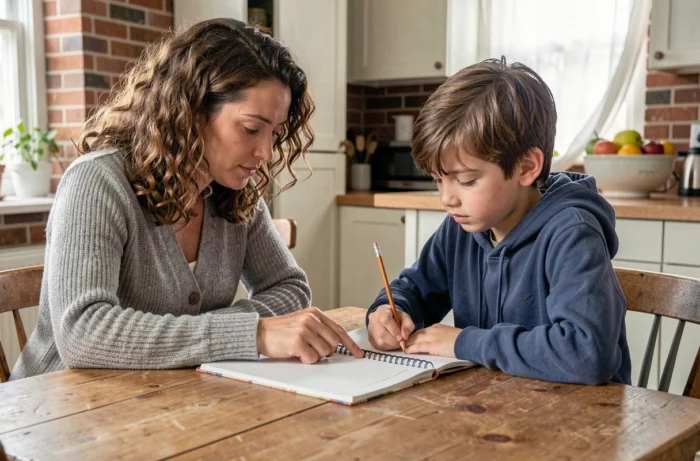
Advice on children’s self-confidence often centres on positive phrases and encouragement. These strategies can work, but their impact depends on the wider context.
Confidence grows through a series of experiences a child can manage, not through repeating set phrases. A five-year-old who tidies their room on their own, an eight-year-old who chooses an after-school activity, or an eleven-year-old who manages a small budget develops a sense of competence grounded in real life.
Independence develops in stages suited to a child’s maturity. Giving a child too much responsibility too soon can have the opposite effect: they struggle and lose confidence. Finding the right balance means observing the child rather than following a standard checklist.
The school’s role in this process deserves attention. Programmes that include social and emotional skills (conflict resolution, expressing emotions, cooperation) reinforce what families are building at home. Everyday support works best when it is aligned with a child’s experience in the classroom, which calls for regular communication with teachers.
Families who identify a mismatch early between their child’s abilities and school expectations can often prevent a downward spiral of disengagement. When difficulties persist despite adjustments at home and open communication, consulting a professional (psychologist, speech and language therapist, child psychiatrist) can provide insights that parenting advice alone cannot.