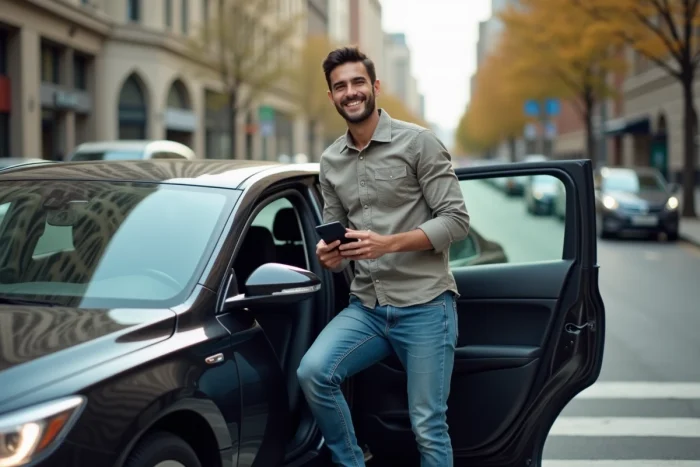
The choice of a company name is rarely a matter of chance. The adoption of the term “Uber” by the American platform stems from a well-defined linguistic and marketing strategy, based on the connotation of superiority conveyed by this German word.
This name aims to position the service at a distinct level from other transport players, emphasizing efficiency, ease of access, and technological innovation. This choice of name is part of a broader differentiation approach, with direct consequences on the perception of the service, its rapid growth, and its influence on the urban mobility sector.
Uber: understanding the service that revolutionized urban transport
In 2009, in the hilly streets of San Francisco, an app was about to reshuffle the cards of urban transport. Uber did not just add a digital option to city travel: it changed the way people move, order a ride, pay, and simply think about mobility. By instantly connecting passengers and private drivers via a smartphone, the platform broke the rigid codes of traditional taxis. Today, in Paris, Lyon, Bordeaux, and over 10,000 cities worldwide, Uber has slipped into urban routines, praised for its speed and ease of access. Ordering a car, tracking its arrival to the minute, paying for the ride without handling cash: it has become a reflex, almost a given for millions of users.
To illustrate this transformation, one only needs to glance at the diversity of its offerings. Here are the main options that have managed to meet the variety of urban uses:
- UberX: the everyday choice for simple travel.
- UberPool: share the ride and lighten the bill by carpooling.
- Uber Lux: focus on comfort and prestige.
- UberVan: transport a group without complicating life.
- UberGreen: prioritize electric or hybrid mobility for a reduced environmental impact.
Behind this range of services, the flexibility offered to professional drivers has transformed industry habits. Thanks to an app designed for them, they adjust their schedules, optimize their profitability, and track their rides in real-time. A new figure has emerged: that of the VTC driver, whose status and practices have evolved with the professionalization driven by this platform.
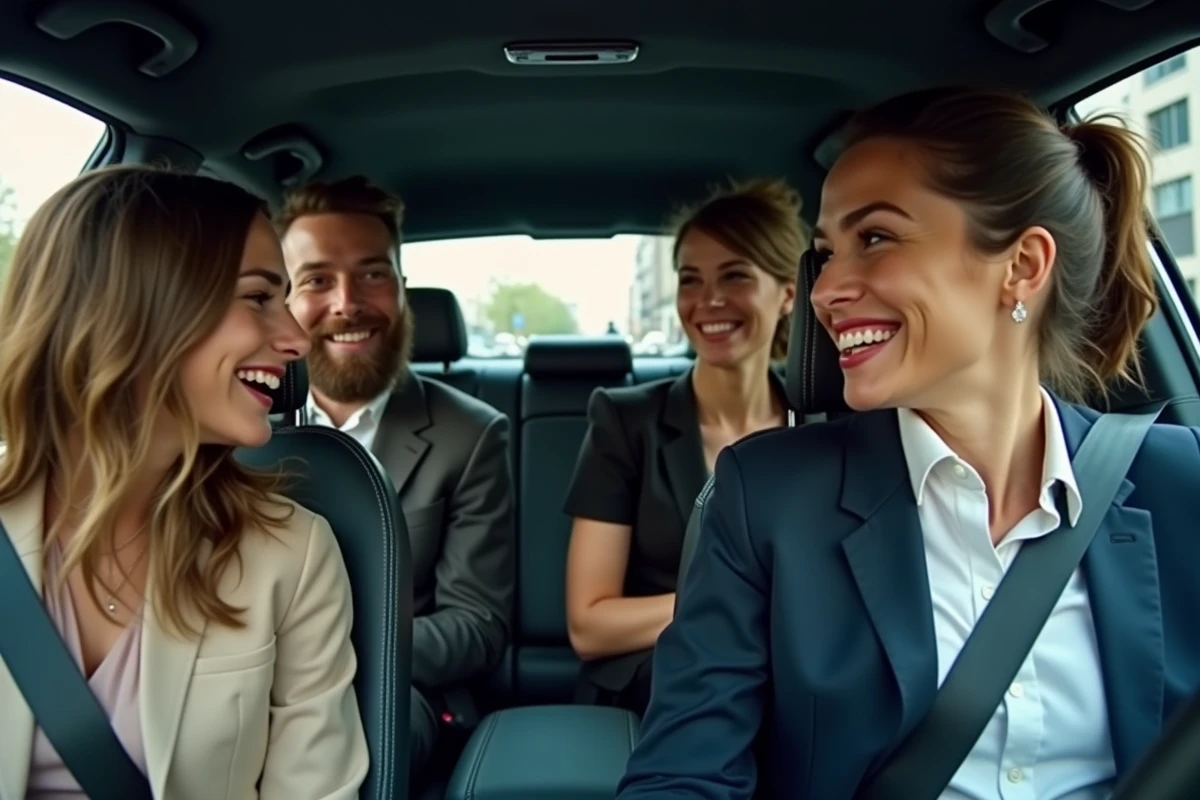
Carpooling with Uber has complemented this offering. Designed to streamline urban journeys while making transport more affordable, it allows for grouping several passengers heading in the same direction. This aspect, developed in the article “Carpooling: why did Uber choose this name? – One Business,” reflects Uber’s ability to adapt, anticipate expectations, and assert its unique identity in the global transport landscape.
Why this name? Decoding the origin and meaning of “Uber”
Behind the name Uber, nothing is left to chance. Travis Kalanick and Garrett Camp, the founding brains, were looking for a word capable of carrying their ambition high: that of a service that exceeds standards, that aims further. “Über” in German means “above,” “superior.” The idea of a platform that outclasses everything that existed in the urban transport market is immediately evident in this name.
This choice is not just a linguistic nod. Through this name, the brand asserts a promise: that of a smooth, efficient, and accessible service that does not merely imitate but offers a new experience. Whether with UberX, UberPool, UberGreen, or other variations, each service extends this idea of innovation and reimagined mobility.
The strength of the name also lies in its brevity and universal pronunciation. Regardless of the language or city, “Uber” is memorable, imposing, and crosses borders. For Travis Kalanick, adopting this term was to affirm their desire to be a reference, to become the service adaptable to all cities, all uses, and every passenger. This branding strategy, focused on the notion of surpassing, has forged a strong, indelible identity that resonates wherever the app is installed.
A major cultural and economic impact: how Uber established itself against its competitors
Uber has not only shaken up transport habits: it has caused a real cultural and economic shockwave. The explosive arrival of the service, conceived in San Francisco by Travis Kalanick and Garrett Camp, has given rise to a new way of moving around, but also of thinking about mobility in the city. Everywhere, drivers have joined the project, from Paris to New York, from Bordeaux to New Delhi, providing unprecedented alternatives to traditional taxis and existing VTC drivers.
On the strategy side, Uber’s rise has been supported by colossal investments of several billion dollars from international funds. This firepower has allowed for rapid expansion, making the app indispensable on a global scale. Uber has also shown agility, constantly adapting its offerings: UberX, UberPool, Uber Eats, Uber Lux, as well as more unexpected options like Uber Jump for bikes or Uber Copter for urban helicopters. This ability to respond to the diversity of cities, local laws, and user expectations has made all the difference.
The expansion has not been a smooth ride. In France, the Thevenoud Law marked a turning point in the regulation of the sector. In New York and Paris, debates have remained heated, confronting the platform with historical VTC taxis, raising questions about the status of professional drivers. Despite these obstacles, the brand has managed to embed itself in daily life, permanently disrupting habits. A symbol of this cultural change, the name “uber” has transformed into a verb, as noted by Thibaud Simphal, former general director of France.
In 2022, the group’s revenue surpassed the $30 billion mark worldwide. Uber continues to diversify, going further: new segments, innovations in safety, ecology, accessibility… The company is still shaping the contours of urban mobility, driven by the growing demands of contemporary societies. Who would have bet, fifteen years ago, that four German letters would redefine how we navigate our cities?