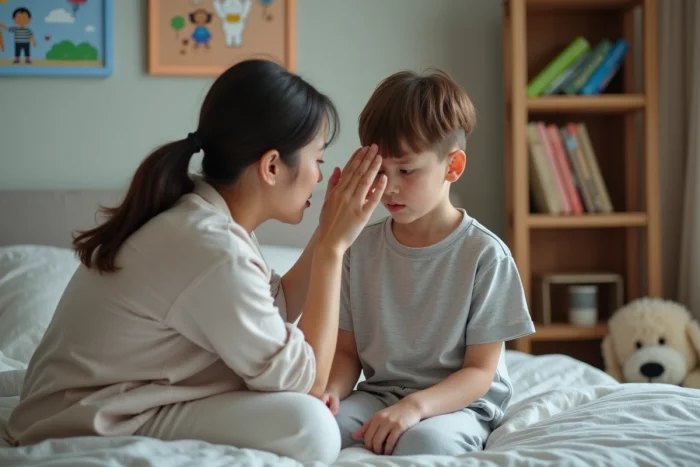
Persistent but moderate fever, intriguing digestive issues, red patches on the skin: these signs have disrupted daily life since the arrival of new Covid-19 variants in 2026. What we thought we knew about sick children is no longer valid: cough and nasal congestion are no longer at the forefront, and we must learn to read between the lines.
Now, every detail matters. Symptoms that were once trivial take on a whole new significance, the organization of care has adjusted, and recommendations evolve with the virus. Families navigate with more information, encouraged to act at the first signs, so that prevention aligns with the reality of the youngest.
Covid-19 in 2026: manifestations in children take on a new face
Reference points are upended. In the face of the frankenstein xfg variant, the usual scenario no longer holds. Coughing has disappeared from the spotlight, replaced by stomach pains, persistent fatigue, lasting headaches, or unexpected red patches. Many parents see these signals emerge without really knowing what to expect. Sometimes subtle, sometimes frankly bewildering, they destabilize those who thought they had a handle on the subject of winter illnesses.
To sort through and not miss anything, a reliable reference has earned its place: the guide to symptoms of covid 2026 in children provides precise insights to distinguish signs and act quickly.
Other concerns also arise: when a pediatric multisystem inflammatory syndrome manifests, it catches everyone off guard. Several days, or even one or two weeks after contamination, profound fatigue, marked digestive issues, and spreading patches can strike without warning. This forces vigilance and a reassessment of the follow-up for young patients, even after a period of improvement.
Healthcare providers observe: more and more children are dragging themselves, irritable, reluctant to play or eat, nauseous for no apparent reason. Nights are restless, the skin shows red spots, and fatigue is inventive and persistent. This long Covid, in its 2026 version, complicates interpretation, sweeping away established patterns.
In the face of uncertainty, families and communities tighten their ranks. When the virus circulates among close contacts, they observe each other, exchange information, and sometimes even note unexpected details. This shared attention becomes the glue of a new collective vigilance.
Knowing when to consult: signals to watch closely
Some symptoms require quick and immediate action. Among them, those that call for consultation without hesitation include:
- Fever above 38.5°C that does not subside after two days despite usual measures
- Impressive fatigue: lethargic child, prostrate, refusing to drink or eat
- Severe digestive issues: persistent vomiting, unmanageable diarrhea, acute stomach pains
- Skin rashes, swelling, or patches appearing suddenly and without clear reason
- Respiratory difficulties, marked shortness of breath, cough that drains energy
- Neurological signs: severe headaches, altered consciousness, unusual behavior
For every child suffering from a chronic condition, such as diabetes, severe asthma, cardiac or immune fragility, any change necessitates a rapid response and direct contact with the usual healthcare professional. Health authorities, led by the WHO, emphasize the need to remain attentive to any suspicious developments in vulnerable profiles.
When multiple generations live under the same roof, or in the presence of a person at risk, such as during pregnancy, serious illnesses, or old age, a PCR test should be considered without delay at the first signs of doubt. Updating barrier gestures then becomes a reflex to protect all close contacts. Monitoring, noting, and exchanging observations builds a true defense against the insidious deterioration of the situation.
Limiting transmission: daily gestures and realities at school
Limiting the spread of the virus is now part of the routine. Careful handwashing with soap and water remains the first line of defense. Disposable tissues, used and discarded promptly, cut short the spread of coronavirus.
To instill good reflexes in the youngest, several simple practices have become essential in daily life:
- Coughing or sneezing into the elbow
- Avoiding hand contact with the face as much as possible
- Involving each child so that these gestures become natural and lasting
Schools continue to adapt, supported by families. As the circulation of the virus intensifies, the wearing of FFP2 masks expands, prioritizing the most vulnerable students or their surroundings. Educational teams, in connection with the Ministry of Health and Prevention, are reinventing ventilation, moving some furniture, and sometimes rearranging meal times. Each action aims to make the transmission chain more difficult among children.
Regarding vaccination, the decision will depend on each young person’s medical profile, guided by the advice of their treating physician. For information on pediatric vaccination, families have resources such as the Vaccination Info Service website, which is frequently updated. Integrating these measures into daily life protects the group without burdening the children’s lives.
Never has the idea of adaptation so impacted communal life: between transmitted gestures, new habits, and solidarity woven into daily life, everyone contributes to preserving the collective. The virus continues to mutate, but the ability to respond together sketches a more robust trajectory in the face of the unexpected.