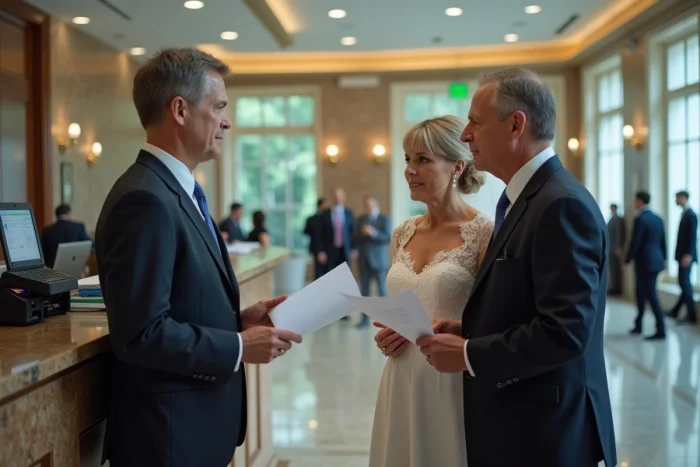
A marriage refusal is not an administrative whim that fell from the sky. Behind the doors of the town hall, it is the law that prevails, and not always in the direction expected by the future spouses. The texts are clear: the mayor has the power to say no, but he does not wield it lightly. This abrupt halt is sometimes based on concrete criteria, which may be unknown or misunderstood. For the couples involved, the element of surprise can be compounded by a sense of injustice, as marriage remains perceived as an inalienable right.
Marriage refusal at the town hall: understanding the legal framework and the rights of couples
Every marriage in France is scrutinized under the watchful eye of the Civil Code. It is impossible to hope for validation without the civil status officer inspecting every document, every declaration. The slightest breach of the legal framework can lead to a postponement or even a outright rejection. Here, nothing is left to chance: a doubt about a partner’s French nationality, unreliable papers, suspicions about the reality of the relationship… The refusal does not happen randomly: it is based on well-established foundations. To delve deeper into these rules and understand their practical application, the reasons for a marriage refusal at the town hall provide a detailed overview of the commonly encountered motives.
Among the situations presented during a refusal, three frequently recur:
- the omission of a required file or supporting document
- failure to comply with the regulatory publication deadline
- an existing previous marriage still in effect
No decision is taken lightly: the mayor must justify everything in writing, directly referring to the text of the law, under the supervision of the prosecutor. The rights of the couple remain intact; a refusal always implies a written record and mention of the specific legal basis.
No one is deprived of their right to marry simply due to a refusal at the town hall. Any couple can contest, usually before the judicial court. This process requires both method and rigor: anticipating risks, properly preparing one’s file, these are the tools to achieve one’s goal.
Why can a mayor oppose a civil union? The most common reasons
When a town hall opposes validating a union, it is never a whim. We are talking about specific legal grounds, drafted to preserve the integrity of the marriage institution. Every year, hundreds of couples encounter these obstacles, mostly related to the authenticity of the union project.
Some signs raise the attention of the civil status officer: significant age differences, a clear lack of proof of cohabitation, inconsistencies during the interview, for example. When doubts arise about the possibility of a sham marriage, a marriage primarily aimed at obtaining a residence permit, the matter may be escalated to the public prosecutor.
To better understand the reasons for refusals, we can cite these examples among the most common:
- missing documents, or civil status acts considered dubious
- non-compliant stay in France for a foreign future spouse
- an existing marriage pending, legally prohibiting the new union
- presumption of external pressure or uncertainty regarding true consent
A dysfunction revealed after the signature can lead to the nullity of the marriage. These issues go beyond the mere ceremony: family law ensures that every marriage is genuine, loyal… and compliant with common law.

What to do in case of refusal: procedures, appeals, and legal support
A refusal is never left vague: the first thing to do is to demand a written notification, explaining the reasons invoked. This document will condition the next steps: without it, no contestation can proceed on solid ground.
The procedure then kicks off very quickly. Once the notification is received, the couple has a period of 10 days to submit their file to the public prosecutor. The latter verifies, summons if necessary, and pronounces his decision within fifteen days. If the blockage persists, it will be necessary to strengthen the appeal and take the matter to the judicial court to obtain the lifting of the opposition.
On the method side, a well-prepared file makes all the difference. It is essential to gather:
- all the expected original civil status documents
- concrete evidence of cohabitation under the same roof
- elements likely to attest to the reality of the marital project
Consulting a lawyer experienced in the subtleties of family law or matrimonial litigation provides genuine strategic support. These specialists understand the reality of the checks, know how to avoid the pitfalls of false declarations, and skillfully handle case law.
With their support, the steps to obtain a successful legal action take on a new dimension, backed by solid arguments. If the judge deems the refusal unfounded, the marriage will ultimately be celebrated. This journey often requires patience and determination. For the couple, transparency and sincerity remain the safest path. Behind the administrative aspect, there is above all a human commitment to defend, and society as a whole to convince of the validity of this shared project.