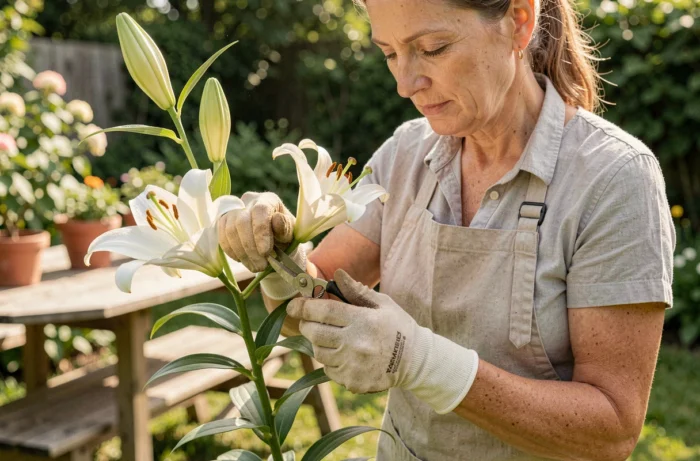
A bouquet of lilies placed on the living room table, and within a few hours the tablecloth bears a stubborn orange stain. We all know this scenario. Removing the pistil from the lilies before it releases its pollen prevents this type of damage, but this simple act also addresses less obvious issues, particularly the protection of pets.
Lily Pollen and Toxicity for Cats: The Risk That Decor Tips Overlook
Most online advice about lily pistils focuses on vase life or stains on clothing. The real danger to cats is rarely mentioned.
Lilies of the genera Lilium and Hemerocallis are toxic to felines in all their parts: petals, leaves, stem, vase water, and pollen. Just a few grains of pollen licked off the fur can trigger acute kidney failure in cats, potentially fatal within 24 to 72 hours. Many pet owners believe the danger only exists if the animal eats the plant, which is false.
Removing the stamens as soon as the bud opens does not completely eliminate the risk (the rest of the plant remains toxic), but it does remove the most insidious source of contamination: the pollen that settles on furniture, floors, and fur. If you have a cat at home, understanding why to remove the pistil from lilies becomes a matter of animal safety, not just aesthetics.
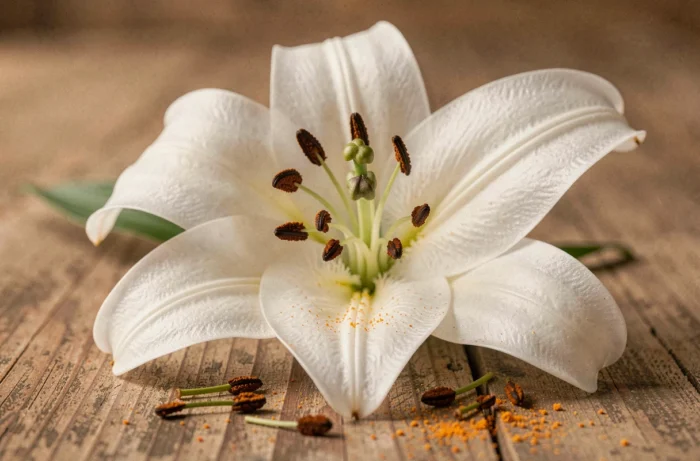
Stamens or Pistil of the Lily: What We Really Remove
We often hear “cut the pistil,” but in practice, it is the pollen-laden stamens that are removed. The pistil is the female organ, located at the center of the flower. The stamens carry the anthers: these small elongated sacs covered with orange or yellow powder.
Confusing the two does not have serious consequences for the act itself, as we generally remove everything that protrudes from the heart of the flower. But knowing how to distinguish between them helps to identify the right moment to intervene.
When to Intervene on the Flower
The best time is when the bud has just opened and the anthers are still slightly sticky. At this stage, the pollen has not yet dispersed in the form of dry powder. If you wait too long, the powder will fall at the slightest draft, and the damage is done.
On a bouquet bought with closed buds, the flowers open staggered over several days. Therefore, the operation is not done all at once: each stem must be monitored, and the stamens removed flower by flower as they open.
Removing Stamens from Lilies Without Staining Your Fingers or Damaging the Flower
The action seems simple, but a few common mistakes turn the operation into a cleaning session. Here’s the method that works in practice.
- Use a folded paper towel to grasp each anther between your thumb and index finger, then gently pull upwards. The paper absorbs the pollen on contact and protects your fingers.
- Do not use scissors to cut the filaments (the stem of the stamen): the cutting motion makes the flower vibrate and sprays pollen onto the petals. Gentle pulling is cleaner.
- Work over a sink or an easily wipeable surface. If pollen falls, do not rub: using a piece of adhesive tape to lift the grains works better than a damp cloth, which spreads the stain.
- Wear dark clothing or an apron. Lily pollen stains are especially visible on light fabrics and quickly embed in natural fibers like cotton or linen.
What to Do If Pollen Has Already Stained a Fabric
The first reflex: do not wet the stain. Water sets the pigment in the fiber. Shake the garment to remove excess, then use adhesive tape to lift the remaining grains.
Next, exposing the stained fabric to direct sunlight for a few hours helps break down the pigment. Results vary depending on the type of fabric, but on white cotton, UV light yields good results even before washing.
Lilies in a Bouquet: Extending Vase Life After Removing Stamens
Removing the stamens is not just a preventive action. A lily freed from its anthers lasts significantly longer in a vase, because the flower no longer expends energy to produce and release pollen. The remaining energy is redirected to maintaining the petals.
To enhance this effect, a few complementary actions matter:
- Recut the stems at an angle every two days and change the water. Clean water limits bacterial growth that clogs the stem’s vessels.
- Place the vase in a bright spot but out of direct sunlight, and away from fruit. Fruits emit ethylene, a gas that accelerates the wilting of lilies.
- Remove leaves submerged in water: they decompose quickly and contaminate the vase.
The lily season mainly extends from May to October. Oriental varieties, with large fragrant flowers, and Asian varieties, which are unscented but have brighter colors, do not react quite the same way in a vase. Asian lilies open more quickly, shortening the time to intervene on the stamens.
The best time to buy lilies in a bouquet is when they are tightly closed. You gain several days of longevity, and you have time to remove the anthers before they open. A bouquet delivered already bloomed with visible pollen on the petals has already lost part of its lifespan.
This gesture of a few seconds per flower protects textiles, extends the bouquet’s duration, and, for households with a cat, reduces a real health risk. So many reasons to make this a habit with the next bouquet.